

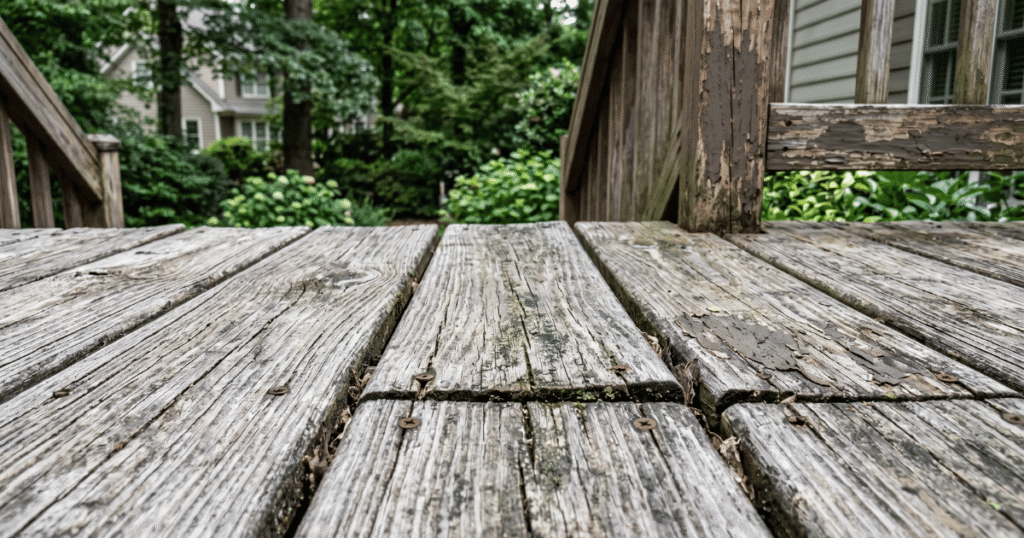
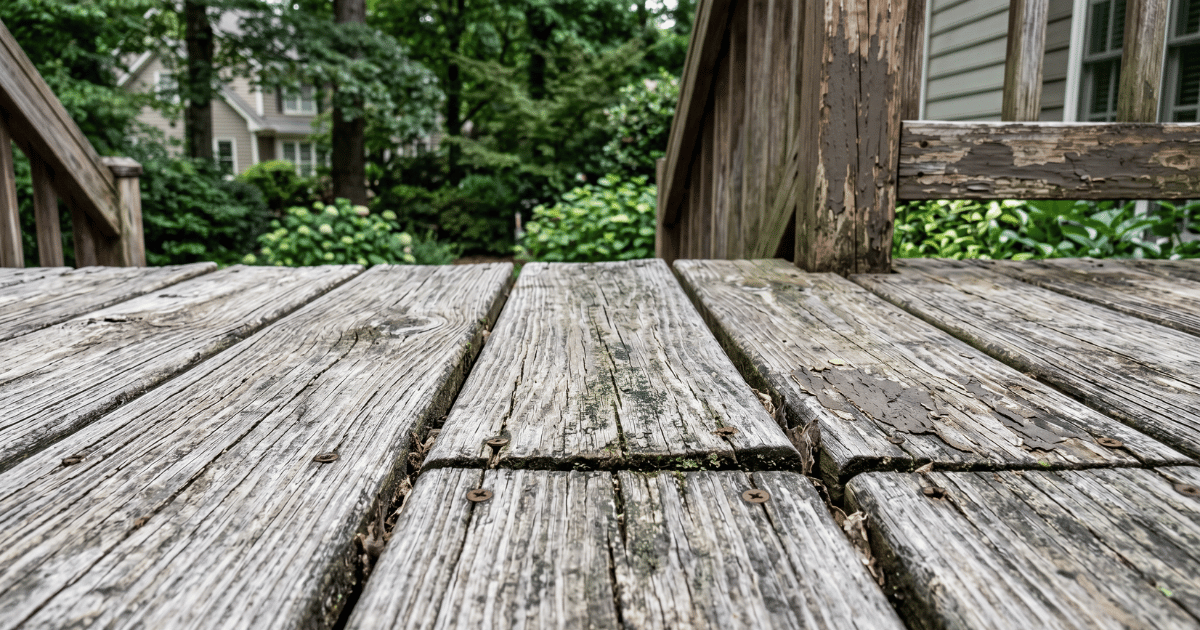
Your deck takes a beating in Dunwoody. Between Georgia’s intense summer heat, 50+ inches of rain a year, and humidity that regularly hits 80–90%, unprotected wood doesn’t stand a chance. That’s why deck staining isn’t just about looks — it’s the most important maintenance step you can take to keep your deck from rotting, warping, and falling apart.
This guide covers everything Dunwoody homeowners need to know about deck staining: how to tell when it’s time, whether to stain or paint, what the process looks like, how much it costs, and when the best time to do it is here in Georgia.
How Do I Know If My Deck Needs to Be Stained?
You don’t need to wait until your deck looks terrible. Here are the signs that it’s time to restain:
- The water test — Sprinkle water on your deck boards. If the water beads up, the stain is still doing its job. If the water soaks into the wood within 10 seconds, the seal is gone and your deck is absorbing moisture every time it rains.
- Faded or gray color — If your deck has lost its rich wood tone and looks dull, gray, or bleached, the protective layer has worn away.
- Peeling or flaking finish — Visible peeling or cracking means your previous stain or paint is no longer protecting the wood.
- Mold or mildew spots — Black, green, or dark patches mean moisture is getting into the wood. Left alone, this leads to rot.
- Splintering or rough boards — Boards that feel rough or splintered underfoot are no longer protected.
- Soft spots — Any area that feels soft or spongy when you press on it needs immediate attention — that’s early-stage rot.
Should You Stain or Paint Your Deck?
This is one of the most common questions we get from Dunwoody homeowners — and the answer matters a lot, especially in Georgia’s climate.
Why Most Professionals Recommend Stain for Georgia Decks
Stain penetrates into the wood fibers rather than sitting on top as a surface film. In a high-humidity environment like Dunwoody, this makes a big difference. When paint is applied to horizontal deck surfaces, it forms a thick film that traps moisture underneath. As the wood expands and contracts through Georgia’s temperature swings, that film cracks, peels, and blisters — sometimes within a single season.
Stain moves with the wood. It doesn’t peel the same way paint does, and when it’s time to reapply, prep work is much simpler — usually just a thorough cleaning and light sanding rather than full stripping.
Stain vs. Paint — Quick Comparison
| Feature | Stain | Paint |
|---|---|---|
| Shows wood grain | Yes (semi-transparent) or no (solid) | No |
| Peeling risk in Georgia humidity | Low | High |
| Reapplication ease | Easy — clean and recoat | Hard — must strip first |
| How long it lasts | 2–3 years in Georgia | 5–7 years (if it doesn’t peel) |
| Best for | New or well-maintained wood | Older decks with lots of imperfections |
The bottom line: For most Dunwoody decks, stain is the better long-term choice. Paint lasts longer on paper, but when it fails in our climate — and it often does — the labor to strip and repaint is expensive. Stain is lower risk and easier to maintain.
What Type of Stain Is Best for a Dunwoody Deck?
There are three main types to know:
- Clear stain — Shows the full natural wood grain and color. Looks great but offers the least UV protection. Needs reapplication every 1–2 years in Georgia’s sun.
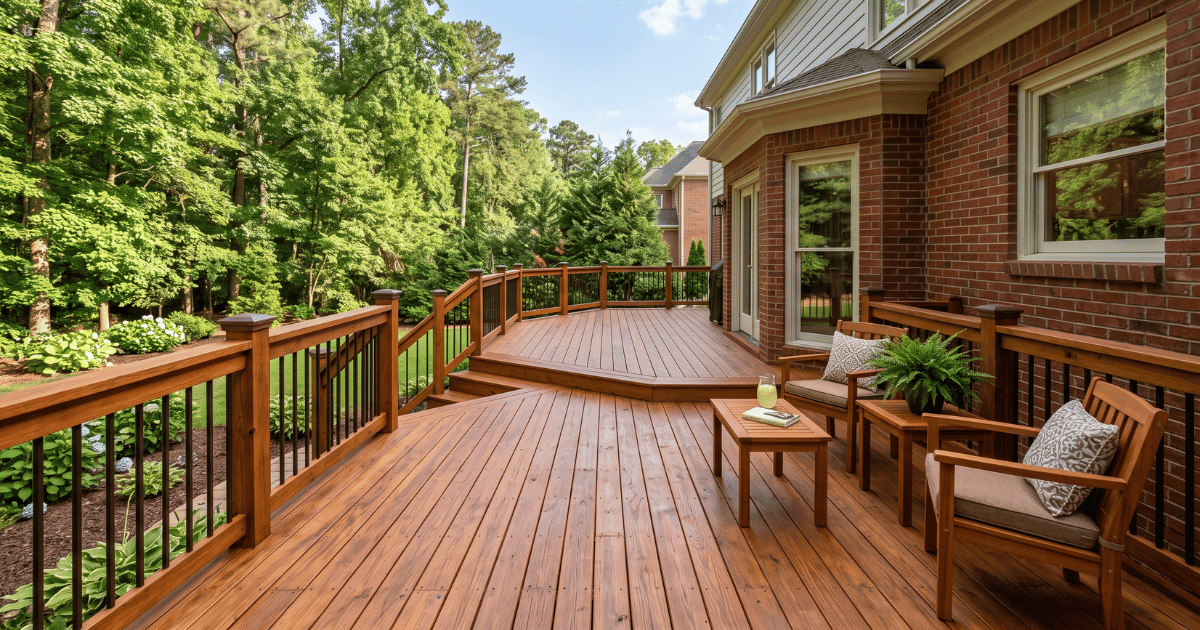
- Semi-transparent stain — Adds a hint of color while the wood grain still shows through. Good moisture and UV protection. This is the most popular choice for Dunwoody homes. Lasts 2–3 years.
- Solid stain — Fully opaque, like paint, but thinner. Hides imperfections and provides strong color coverage. Good for older, weathered decks. Can peel in high humidity if over-applied.
For most wood decks in the Atlanta area, a semi-transparent penetrating oil-based stain is the go-to recommendation. Brands like TWP, Cabot, and Ready Seal are trusted by local professionals because they soak into the wood grain, resist Georgia’s moisture and UV, and don’t form a surface film that peels.
How Often Should You Restain a Deck in Georgia?
In Georgia’s climate, most wood decks need restaining every 2 to 3 years. Decks that get full sun all day or see heavy foot traffic may need attention closer to the 2-year mark. Decks in shaded areas or with less traffic can sometimes go 3 years before needing a fresh coat.
Rather than sticking to a strict calendar, use the water test every spring. Pour a cup of water on a few different spots. If it soaks in quickly, it’s time to restain. If it beads up and rolls off, you’re good for another season.
Signs you can’t ignore regardless of timing:
- Gray, weathered-looking boards
- Visible mold or mildew growth
- Boards that feel rough or splintered underfoot
- Any soft or spongy areas when you press down
What Is the Best Time of Year to Stain a Deck in Dunwoody?
Timing matters more than most homeowners realize. Stain applied in the wrong conditions won’t bond properly, won’t last as long, and can look uneven or streaky.
For Dunwoody and metro Atlanta, the two best windows are:
- Spring (March through May) — Temperatures are mild, humidity is lower than summer, and you can get the deck ready before the heavy use season starts. Watch for April rain — you need at least 24–48 hours of dry weather after staining.
- Fall (September through November) — Often the best window. Temperatures drop back into the ideal range, humidity eases up, and the deck has time to cure before winter.
Avoid staining in mid-summer in Georgia. Afternoon thunderstorms are unpredictable, and temperatures above 90 degrees cause the stain to dry too fast on the surface before it can soak into the wood — which leads to an uneven finish that won’t last.
The ideal conditions for deck staining are temperatures between 50 and 90 degrees Fahrenheit, humidity below 60–80% depending on the stain type, and at least 48 hours of dry weather in the forecast after application.
What Does the Deck Staining Process Look Like?
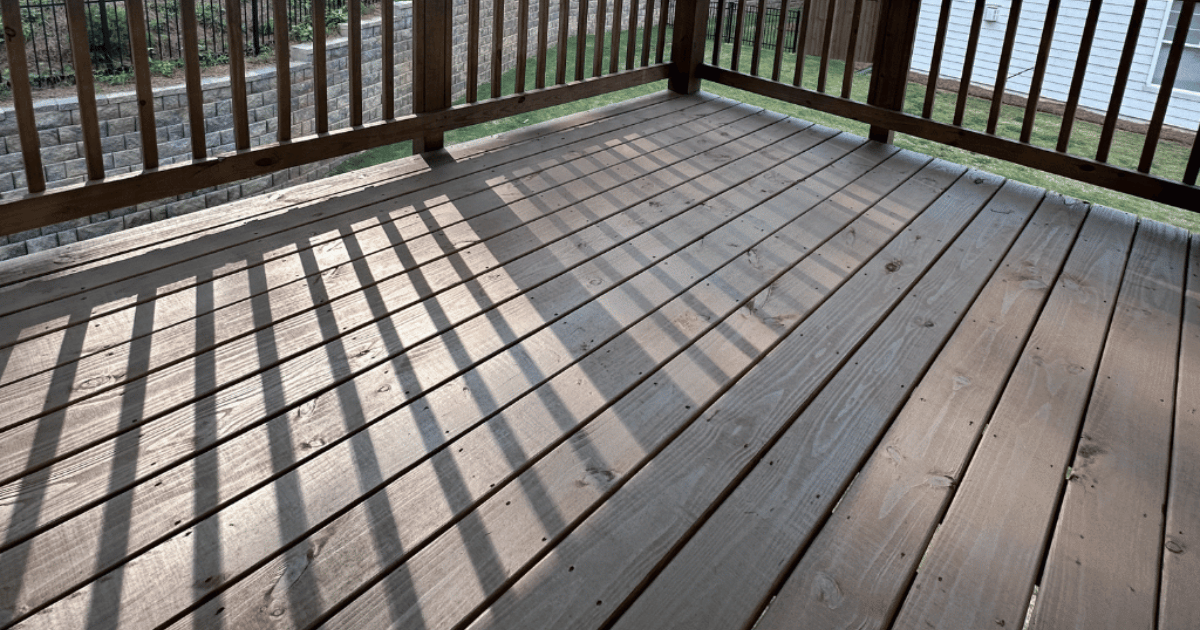
A professional deck staining job isn’t just rolling stain on and calling it done. Here’s what the full process looks like when it’s done right:
Step 1 — Inspection
Before anything else, the deck gets a thorough inspection. A good contractor will check for soft spots, rotted boards, loose fasteners, and any structural issues that need to be fixed before staining. Staining over damaged wood is a waste of money — the damage gets worse underneath.
Step 2 — Cleaning
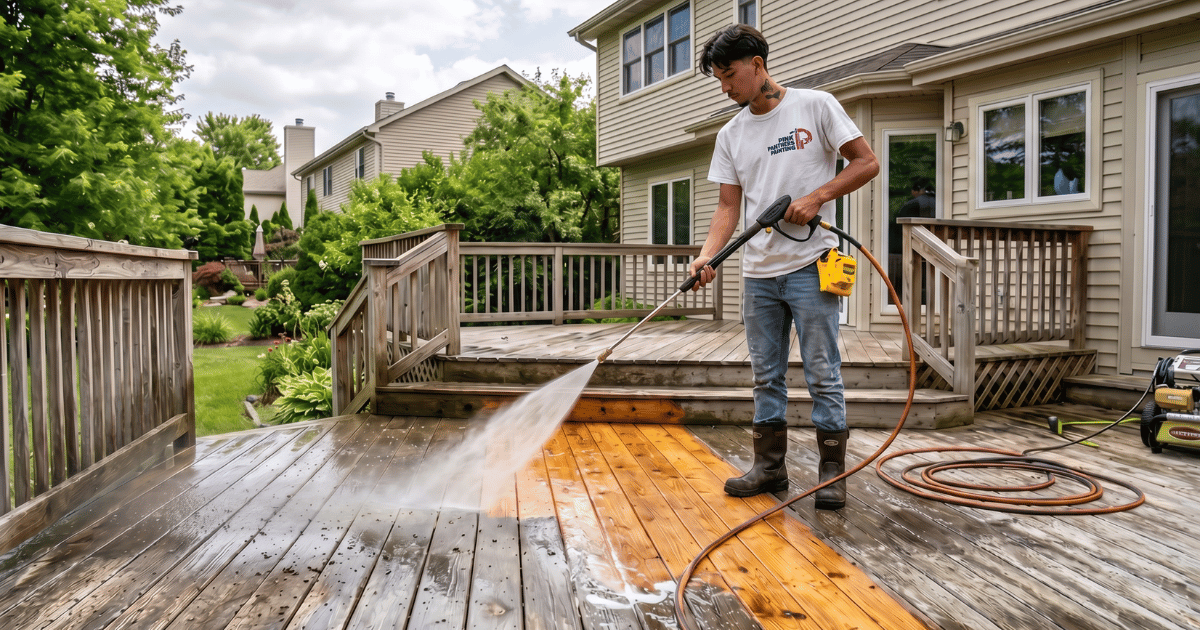
The entire deck is power washed to remove dirt, mold, mildew, algae, and old loose finish. This step is critical — stain won’t bond properly to dirty or contaminated wood. Depending on the condition of the deck, a wood brightener or cleaner may also be applied to open the wood grain and prepare it for stain penetration.
Step 3 — Drying
The deck must dry completely before stain goes on. This usually takes 24–48 hours after cleaning. Rushing this step is one of the most common causes of deck staining problems — stain applied to damp wood won’t penetrate and will peel prematurely.
Step 4 — Sanding (if needed)
Rough spots, raised grain, and splinters are sanded smooth. Railings and spindles typically get extra attention here since they’re exposed to rain and UV from multiple sides and wear faster than deck boards.
Step 5 — Stain Application
Stain is applied by brush, roller, or sprayer depending on the surface. Railings and spindles are always hand-brushed to make sure all surfaces get full coverage. Deck boards are typically sprayed or rolled and then back-brushed to work the stain into the grain evenly.
Step 6 — Curing
After staining, the deck needs 24–48 hours to cure before furniture is moved back and foot traffic resumes. During this time, keep the deck dry — even morning dew can interfere if the stain hasn’t fully set.
How Much Does Deck Staining Cost in the Atlanta Area?
Professional deck staining in the Atlanta and Dunwoody area typically costs between $550 and $1,250 for most residential decks, with an average around $850. Staining costs are usually priced at $2 to $4 per square foot.
Here’s what affects your total cost:
| Factor | Impact on Cost |
|---|---|
| Deck size | Biggest driver — larger deck = higher cost |
| Condition of the deck | Heavy cleaning, stripping old finish, or repairs add cost |
| Number of levels and stairs | Multi-level decks and railings take more time |
| Type of stain | Premium penetrating oil stains cost more than basic products |
| Any repairs needed first | Rotted boards or loose posts are repaired separately before staining |
At Pink Panthers Painting, we include cleaning, prep, and staining in one quote — no surprise charges for the power wash or the prep work. We also handle any minor repairs before staining so you’re not coordinating multiple contractors.
Why Georgia’s Weather Makes Deck Maintenance So Important
Dunwoody homeowners deal with conditions that are tough on wood decks year-round:
- Over 50 inches of rain per year — Atlanta gets more annual rainfall than Seattle. Unprotected wood soaks it all in.
- High humidity — Georgia summers regularly hit 80–90% humidity. Even on days when it doesn’t rain, the air itself is pushing moisture into wood.
- Intense UV exposure — Strong summer sun bleaches and breaks down wood fibers and destroys protective finishes faster than in cooler climates.
- Temperature swings — The shift from hot summers to cool winters causes wood to expand and contract, which stresses the wood and any finish sitting on top of it.
An unprotected wood deck in Georgia can start showing serious wear within a single season. A properly stained and sealed deck can last years longer and avoid expensive structural repairs down the road. You can learn more about how moisture affects wood on the EPA’s moisture and mold guide for homeowners.
Pink Panthers Painting — Deck Staining in Dunwoody, GA
At Pink Panthers Painting, deck staining is part of our deck staining services for homeowners across Dunwoody and metro Atlanta. We inspect the deck first, handle any repairs, power wash and prep the surface, and apply premium stain that’s right for Georgia’s climate — all in one job, one crew, one quote.
We also handle exterior painting and wood rot and drywall repair — so if we spot damage during the deck inspection, we can address it as part of the same project. And if you’ve been dealing with wood rot on your trim or siding, check out our guide on wood rot repair in Dunwoody to understand when to repair vs. replace.
We serve Dunwoody, Sandy Springs, Peachtree Corners, Johns Creek, Brookhaven, and surrounding North Atlanta communities.
📞 Call us at (470) 557-5617 or request a free estimate online. We’ll come take a look at your deck and give you a clear, honest quote.
Frequently Asked Questions About Deck Staining in Dunwoody
How often should I restain my deck in Georgia?
Most wood decks in Georgia need restaining every 2 to 3 years. Decks with full sun exposure or heavy foot traffic may need it closer to every 2 years. The easiest way to check is the water test — pour water on the boards and see if it beads up or soaks in. If it soaks in within 10 seconds, it’s time to restain.
Is it better to stain or paint a deck in Georgia?
For most Georgia decks, stain is the better choice. Paint can look great initially, but Georgia’s heat and humidity cause paint to peel and crack on horizontal deck surfaces. Stain penetrates into the wood and moves with it as it expands and contracts with temperature changes. It’s also much easier to reapply — clean and recoat rather than strip and repaint.
What type of deck stain is best for Atlanta’s climate?
A semi-transparent penetrating oil-based stain is the most recommended option for Dunwoody and Atlanta-area decks. Brands like TWP, Cabot, and Ready Seal are trusted by local professionals. These stains soak into the wood grain, resist Georgia’s moisture and UV exposure, and don’t form a peeling surface film like paint or solid stains can in high humidity.
When is the best time to stain a deck in Dunwoody?
Spring (March through May) and fall (September through November) are the best windows. You need temperatures between 50 and 90 degrees Fahrenheit, humidity below 80%, and at least 48 hours of dry weather after application. Avoid mid-summer staining in Georgia — afternoon thunderstorms and temperatures above 90 degrees interfere with the stain curing properly.
How much does deck staining cost in the Atlanta area?
Professional deck staining in the Atlanta and Dunwoody area typically costs between $550 and $1,250 for most residential decks, with an average around $850. Costs are usually $2 to $4 per square foot. The biggest factors are deck size, condition, number of levels, and whether any repairs are needed before staining.
How long does it take to stain a deck?
Most residential deck staining jobs take one to two days from start to finish — one day for cleaning and prep, and one day for staining. After staining, the deck needs 24 to 48 hours to cure before furniture and foot traffic return. Larger decks or those that need repairs first may take longer.
Do I need to power wash my deck before staining?
Yes — always. Power washing removes dirt, mold, mildew, algae, and loose old finish from the wood surface. Stain won’t bond properly to a dirty or contaminated surface, and skipping this step is one of the most common reasons deck stain fails early. The deck also needs to dry completely — usually 24 to 48 hours — before any stain is applied.
Can you stain a deck that’s already been painted?
It depends on the type of stain. Penetrating stains cannot be applied over paint — the paint creates a film that blocks the stain from soaking into the wood. Solid stains, which sit on top of the surface like paint, can sometimes be applied over existing paint if the paint is in good condition. If you want to switch from paint to penetrating stain, the old paint has to be fully stripped first, which adds significant labor to the project.